
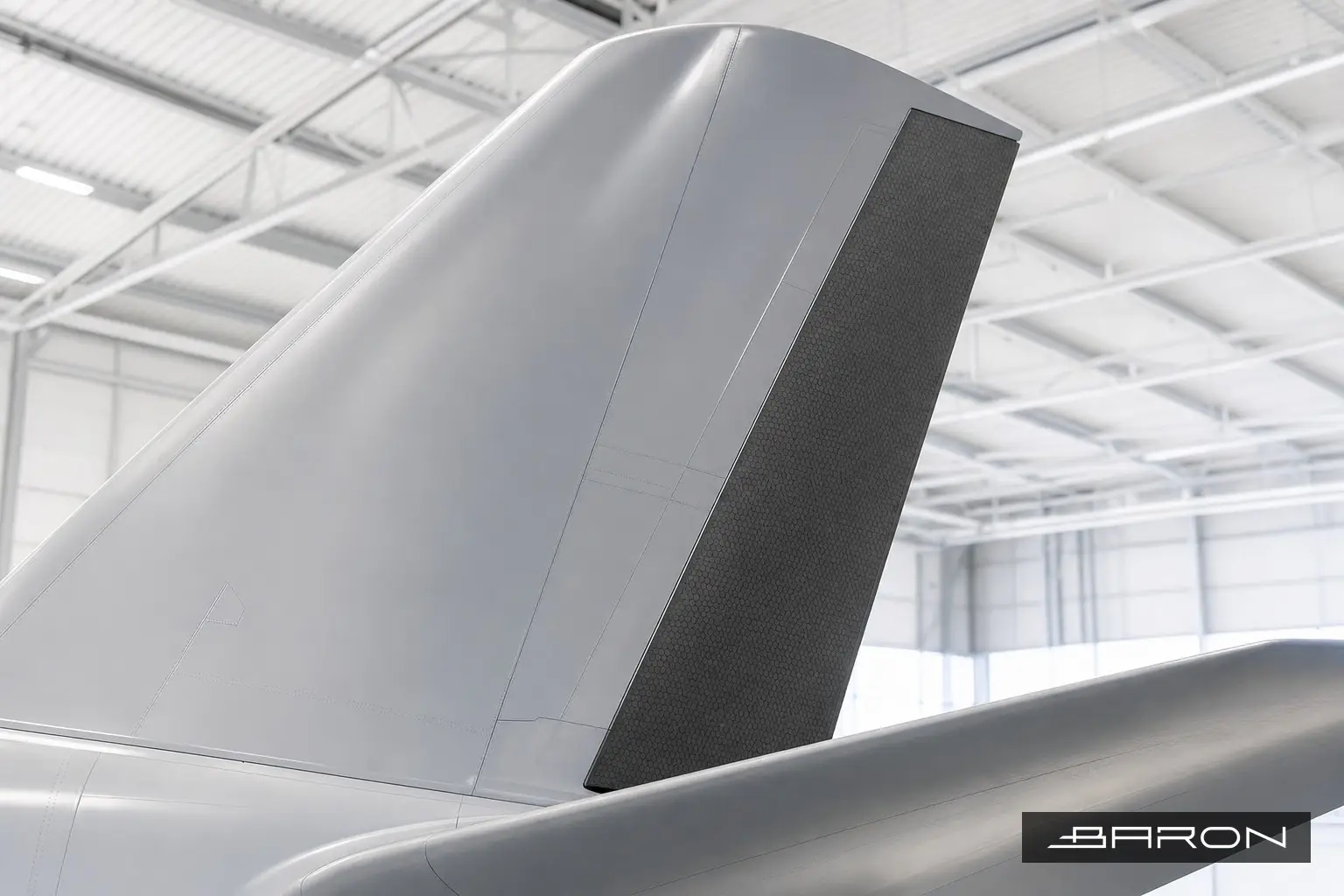
Water is the quiet enemy of a bonded honeycomb structure. It gets into the core through a damaged skin, a cracked closeout, or a failed seal around a fastener, and then it sits there. On a rudder, an elevator, or an engine fan cowl, trapped moisture adds weight, freezes at altitude, corrodes the aluminum core, and pushes the skin off the cells until you have a disbond on your hands. By the time it shows up on a tap test it is usually well advanced. Infrared thermography catches it earlier, faster, and without taking the part apart.
Here is how we approach honeycomb water ingress thermography on aircraft composite panels at Baron NDT, and what the heat signature actually tells you.
Why water hides in honeycomb
A typical control surface is a thin composite or aluminum skin bonded to a Nomex or aluminum honeycomb core. The cells are small and sealed, so once moisture works past the outer skin it has nowhere to go. It pools in the low cells, migrates along the core ribbon, and stays trapped through normal flight cycles. The OEM manuals treat this as a real airworthiness item, which is why Airbus and Boeing call out moisture checks in their NDT manuals for rudders, elevators, and nacelle panels.
The problem with the old methods is sensitivity. A coin tap or a visual will find a soft spot once the bond has already let go. By then the core may be corroded and the repair is much larger. Water ingress thermography lets you see the moisture while it is still a wet area and the bond is mostly intact.
How the heat signature works
Water has a much higher heat capacity than the dry composite and air around it. That difference is the whole inspection. When you apply a uniform thermal load to the panel, the dry areas change temperature quickly while the wet cells lag behind. Watch the surface with an infrared camera during the heating and cooling and the moisture shows up as a distinct cool region against the warmer dry skin.
We run this two ways depending on the part and the access:
- Passive thermography. An aircraft pulled in from a cold soak at altitude is already a test article. The wet cells hold their temperature differently than the dry ones, and a good camera reads the pattern straight off the surface with no added heat source. Useful for a quick screen of a large control surface.
- Active flash thermography. A controlled heat pulse from a flash hood, then a recorded thermal sequence. This is the repeatable method for documentation. The wet area takes longer to return to ambient, so it stands out clearly in the cooldown frames and you get a digital record of exactly where the moisture sits.
Either way the camera is reading a real physical property of the water, not a guess. That is what makes thermography hard to argue with when a finding goes into the records.
Where we find it on the airframe
The usual suspects are the bonded flight control surfaces and the engine area. Rudder side panels and trailing edges, elevator skins, aileron and spoiler panels, and fan cowl and nacelle composite all collect water at the low points and around any breached seal. Airbus references this work in the rudder and elevator NTM sections, and the same physics applies to a Boeing fan cowl. We cover the rudder side in our piece on thermographic inspection of Airbus rudder side panel honeycomb core, and the engine side in engine fan cowl thermography for Boeing composite panels.
Water ingress and disbond go together
Trapped moisture and disbond are two stages of the same failure. Water gets in, corrodes the aluminum core or degrades the adhesive, and the skin lets go. When we scan a panel we are looking for both signatures in the same pass, because a wet area today is a disbond candidate at the next check. The thermal contrast is different for each, so a trained eye can tell trapped water from an air gap from a true bond separation. We go deeper on the separation side in thermography for disbond detection in Airbus rudder bonded skins and on core crush and impact damage in infrared thermography for honeycomb core damage.
Why thermography beats the tap test here
A coin tap is cheap and it works for a quick gut check, but it is subjective, it is slow over a large panel, and it tells you almost nothing about moisture until the bond is already gone. Thermography covers a whole control surface in minutes, gives you a recorded image, and finds water before the structure fails. We lay out the full comparison in thermography vs tap test for composite bond inspection. The short version: tap testing finds problems, thermography finds them sooner and proves it on paper.
Documentation and personnel
None of this counts if it is not done by qualified people to a real procedure. Our thermographers are certified per NAS 410, the inspection runs to the applicable OEM NDT manual and AC 43.13-1B guidance, and every finding goes into a report with the thermal imagery, the location, and the disposition. As an FAA Part 145 repair station, Baron NDT keeps those records so the moisture map is traceable and your maintenance planning has something solid to work from. For the wider picture of how these inspections fit an aircraft, see our complete guide to composite and honeycomb inspection and the broader ultimate guide to aircraft NDT inspection.
The takeaway
Water in a honeycomb core is a problem you want to find while it is still just water, not after it has corroded the core and popped the skin. Thermography reads the moisture directly, covers a large surface fast, and leaves you with a record you can act on. If you have a rudder, elevator, or cowl that has taken impact damage or a failed seal, get it scanned before the next big check turns a small wet spot into a structural repair.