
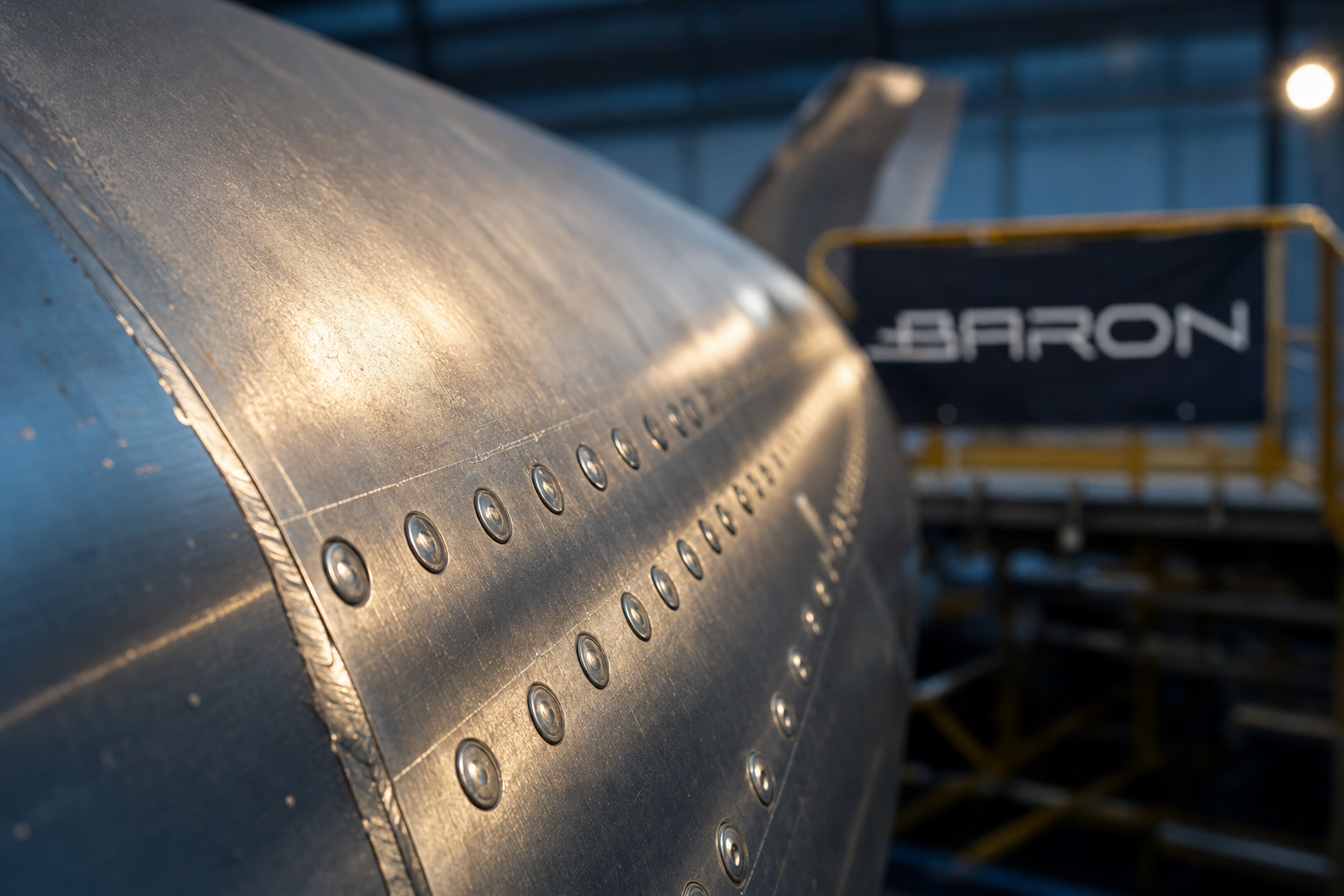
The FAA published a new airworthiness directive for the Boeing 767 that puts the fuselage skin lap joints back under the probe. AD 2026-05-03 targets a specific and easy-to-miss damage mode: scribe lines. These are shallow, sharp gouges left in the aluminum skin, usually by a blade when someone cuts away a decal, strips sealant, or trims around an external repair or antenna. A scribe line looks like nothing. Under cyclic pressurization it behaves like a built-in crack starter, and over enough flights it can seed fatigue cracking that runs along the lap joint.
At Baron NDT we perform exactly this kind of inspection on transport aircraft as an FAA Part 145 repair station, so here is a plain reading of what the directive asks for and how the inspection actually runs on the airplane. If you are tracking the wider run of 2026 directives, our guide to staying compliant with the latest FAA heavy-aircraft ADs without grounding your fleet ties them together.
What the AD covers
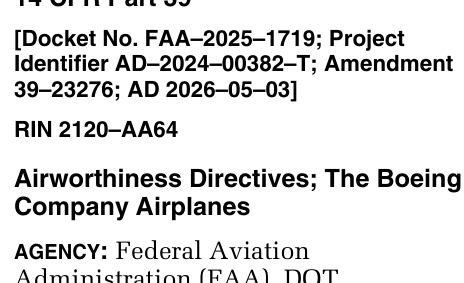
AD 2026-05-03 (Amendment 39-23276, Docket No. FAA-2025-1719) applies to certain Boeing Model 767-200 and 767-300 series airplanes. It was published in the Federal Register on March 12, 2026 and becomes effective April 16, 2026. The FAA issued it after operators reported scribe lines found at skin lap joints and butt joints, around external repairs and antennas, and at locations where external decals had been cut. The concern is the same in every case. A scribe line is a stress riser, and a stress riser in a pressurized aluminum skin is where fatigue cracks like to begin.
If you have followed the recent run of skin and fastener directives, this one rhymes with them. The 737 Classic drain mast skin AD, the A330 windshield frame AD, and the A320 family cold-worked fastener hole AD all come down to the same physics: find the crack while it is small, before it links up and becomes a structural problem.
What the directive requires
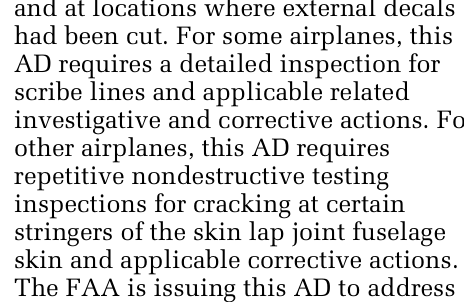
The required action depends on the airplane. For some airplanes the AD calls for a detailed inspection for scribe lines and the applicable related investigative and corrective actions. For other airplanes it requires repetitive nondestructive testing inspections for cracking at certain stringers of the skin lap joint fuselage skin, plus applicable corrective actions. In practice that means the inspection does not stop at one look. It repeats on an interval so a line that was clean last time gets checked again as the airframe keeps accumulating cycles.
How the inspection actually runs
This is a layered inspection, and the order matters. You cannot eddy current a painted surface and trust the result, and you cannot size a crack you have not first found.
It starts with surface prep and a detailed visual. The affected areas get paint and sealant stripped so the bare skin is exposed. A scribe line is a fine scratch, often only a few thousandths deep, so it hides under primer and topcoat. Once the skin is clean, the detailed inspection finds the scribe lines and maps where they run along the lap joint and around repairs, antennas, and old decal cutouts.
Then come the related investigative actions. To tell a harmless scratch from a scribe line that has started to crack, the directive points to low- or high-frequency eddy current or ultrasonic inspection of the scribe lines. Eddy current is the workhorse here. Low-frequency eddy current reaches subsurface and into a second layer of the lap joint, while high-frequency eddy current is tuned tight to the surface to pick up the crack tip right at the scribe. We run the probe along the scribe line itself, watching the impedance signal lift as it passes a crack. Ultrasonic inspection confirms and sizes from the other direction, giving depth on a crack that eddy current has flagged so the repair decision is based on real numbers, not a guess.
If cracking is confirmed, the corrective action is repair. The NDT result is what feeds that decision: where the crack is, how long, how deep, and whether it has grown since the last interval.
Why scribe lines are so dangerous
A scribe line is the textbook example of a manufacturing or maintenance-induced defect that does its damage slowly. The gouge concentrates stress at its root. Every pressurization cycle works that root a little, and aluminum does not forgive cyclic loading at a sharp notch. The crack that grows out of a scribe line follows the line, which is why these run along lap joints and butt joints rather than appearing as a single isolated flaw. Left alone, multiple short cracks along a scribe can link into one long crack. The whole point of catching it with eddy current and ultrasonic is to find each crack while it is still measured in fractions of an inch.
Lap joint inspection on Boeing skin is familiar ground for us. We run similar work on 737NG lap splices under AD 2023-13-05 and the eddy current array special detailed inspection of Boeing longitudinal skin splices, where the same combination of clean surface, detailed visual, and electromagnetic methods does the finding and sizing.
Compliance and documentation
Because this is a repetitive directive, the paperwork is part of the job. Each inspection has to be recorded against the AD, the interval tracked, and the method, frequency, and findings documented so the next inspection picks up where the last one left off. Our broader take on keeping these directives current is in the guide to FAA airworthiness directive NDT compliance, and the methods in this article sit inside the larger aircraft NDT inspection picture.
Baron NDT performs this inspection
Baron NDT is an FAA Part 145 repair station (CRS# 5NDR545D) and a service-disabled veteran-owned small business, with Boeing Conformity Review approval and NAS-410 certified personnel. We perform the detailed, eddy current, and ultrasonic inspections AD 2026-05-03 calls for on the 767 fuselage skin lap joints, including the repetitive intervals and the documentation that keeps an operator in compliance. If you operate 767-200 or 767-300 series airplanes affected by this directive, reach out and we will scope the inspection to your fleet and schedule.