
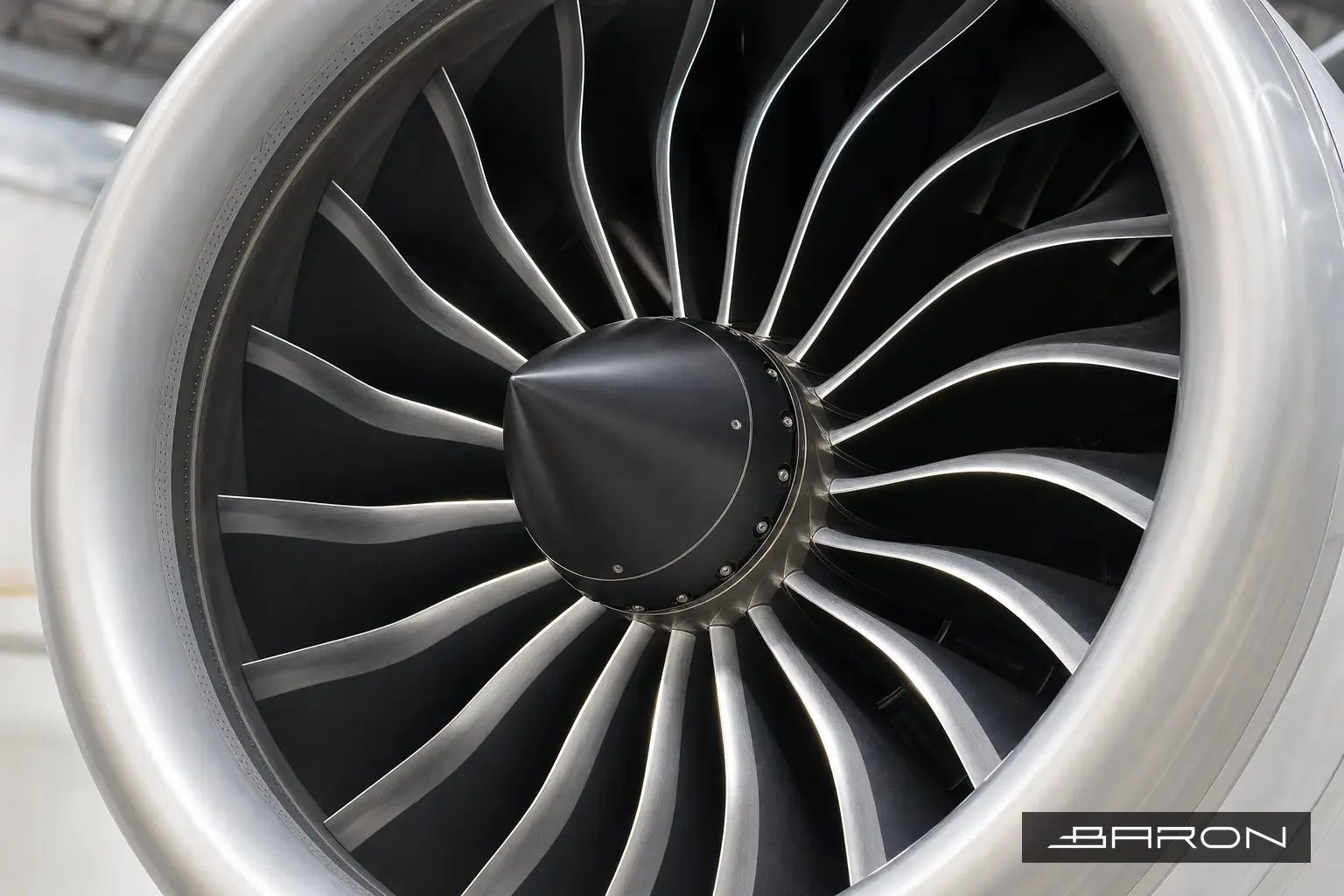
When a foreign object nicks the leading edge of a fan blade, the fix is usually a blend repair. A technician removes the damage with a controlled blend, smoothing the airfoil back into limits. The repair restores the shape, but it raises the real question: did the blending leave a crack behind? That is where fluorescent penetrant inspection earns its keep. A blend repair is not signed off until FPI confirms the reworked area is crack-free.
At Baron NDT this is one of the most common jobs we run. Fan blade leading edge FPI shows up on engine after engine, both on-wing and in the shop, and the standard is unforgiving for a reason. It is one of the high-volume tasks in our broader aircraft NDT inspection work, and a core part of our aircraft engine and MRO NDT coverage. A missed indication on a rotating blade is not a paperwork problem. It is a flight safety problem.
Why the leading edge is the worry
The leading edge of a fan blade takes the brunt of everything the engine ingests. Sand, gravel, hail, bird strikes, and the occasional piece of runway debris all hit the leading edge first. The result is nicks, dents, and tears in the airfoil. Most are minor and well within blend limits, but the act of blending introduces heat and mechanical stress into a highly loaded area. A crack that opens up after a blend can grow under cyclic loading and lead to blade liberation. FPI is the gate that keeps that from leaving the shop undetected.
What FPI actually detects
Fluorescent penetrant inspection finds surface-breaking discontinuities. A fluorescent dye is drawn into any crack open to the surface by capillary action, the excess is carefully removed, a developer pulls the trapped dye back out, and the indication glows under ultraviolet light in a darkened booth. For the method in depth, see our ultimate guide to liquid penetrant and magnetic particle testing. It is simple in concept and ruthless in practice. If a crack breaks the surface of that blended airfoil, properly performed FPI will show it.
The method does not see subsurface flaws, which is why it pairs with eddy current on certain inspections, including the HFEC inspection of fan blade dovetails and pin holes on the same engine. But for confirming that a blend repair is clean and crack-free, FPI is the right tool and the one the engine manuals call out.
The process on a blended blade
A typical leading edge inspection after blend repair follows the engine manufacturer’s published procedure step for step. For CFM and GE engines that often means a callout in the line maintenance manual, for example the GE LMM 70-32-03 family of procedures, or the shop manual section for the specific engine. The general sequence is consistent:
- Clean. The blended area is cleaned so no oil, polish, or residue can block penetrant entry or create a false indication.
- Apply penetrant. Fluorescent penetrant is applied and given its full dwell time so it can wick into any tight crack.
- Remove excess. The surface is carefully cleaned of surface penetrant without flushing dye back out of a real flaw. This step separates a good FPI from a bad one.
- Develop. Developer is applied to draw penetrant out of any discontinuity and spread it into a visible indication.
- Evaluate under UV. The blade is examined in a darkened area under ultraviolet light at the required intensity. The inspector evaluates any indication against the accept and reject criteria in the procedure.
The work is done by certified personnel, Level II or Level III, qualified in penetrant testing under a written practice that meets NAS 410. The inspection is documented with the blade serial or position, the engine, the procedure reference, and the result.
Accept, reject, and what happens next
The outcome is binary in the way that matters. Either the blended area is free of rejectable indications and the blade returns to service, or an indication is found and the blade is dispositioned by engineering. A clean FPI is the documented proof that the repair is sound. That report becomes part of the engine record.
Why operators care who runs it
Fan blade FPI is high-volume and high-stakes at the same time. The same inspection runs over and over, which makes consistency and discipline the whole game. The provider has to follow the exact engine manual procedure, hold the right certifications, control the process variables, and document cleanly enough to survive an audit. Baron NDT performs this inspection routinely for engine shops and operators, on-site and on their schedule, because a grounded engine waiting on an inspector is expensive every hour it sits.
If you have a blend repair that needs FPI sign-off, or you want a provider who can cover fan blade inspections on your turnaround, that is exactly the work we do every week. We run the same disciplined approach on other aircraft structures, from eddy current array on 737 crown skin chem-mill steps to 737NG lap splice inspections under AD 2023-13-05. Reach out to Baron NDT and we will get an inspector on it.