
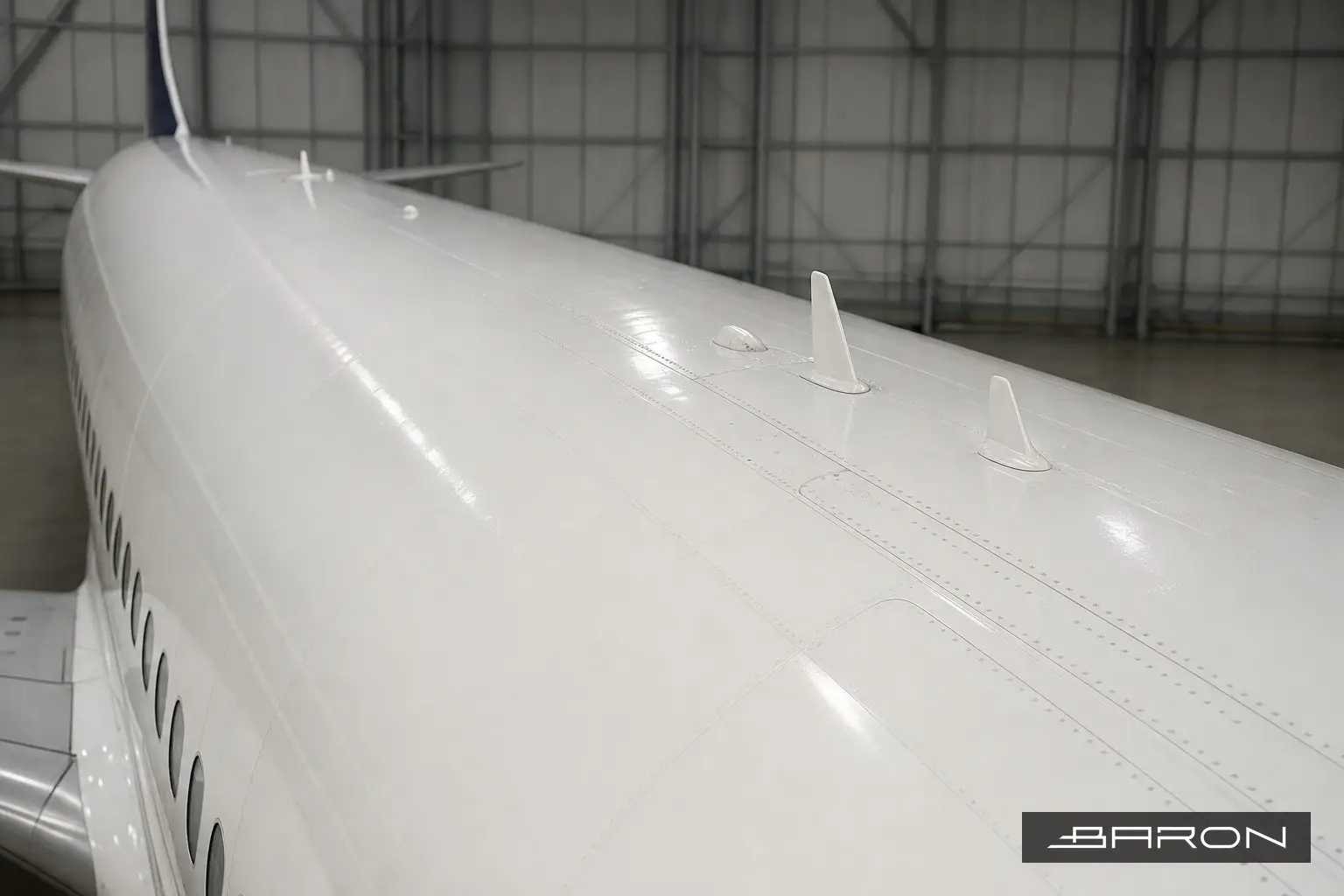
The crown of a 737 fuselage looks like plain aluminum skin from the outside, but it is doing hard work. Pressurization cycles load it every flight, and where the skin is chemically milled to different thicknesses, the steps between those thickness changes become stress risers. Over enough cycles, fatigue cracks can start at those chem-mill steps. That is the exact problem behind the airworthiness directive that drives this inspection, and eddy current array is the method that does it fast and well. Splice structure is inspected the same way; see Baron’s writeup on the eddy current array special detailed inspection of Boeing longitudinal skin splices.
Baron NDT runs this inspection on Boeing fuselages, and it is a good example of where modern array technology earns its place over older single-probe methods. It is one of many recurring tasks covered in our aircraft NDT inspection guide.
Why the chem-mill steps crack
Chem-milling is how Boeing tailors skin thickness across the fuselage, leaving thicker pads where loads are higher and thinner fields where they are not. The transition between a milled pocket and the surrounding skin is a step, and a step is a discontinuity in stiffness. Under repeated pressurization, stress concentrates along these steps. Add antenna cutouts and doublers in the crown, where systems like GPS, MLS, TCAS, and ATC equipment penetrate the skin, and you have local geometry that concentrates stress even further. Fatigue cracks initiate at these points and grow slowly, which is exactly why a recurring NDT inspection is mandated rather than a one-time check.
What the airworthiness directive requires
AD 2013-08-15 and the associated Boeing service documentation call out repetitive inspections of specific crown skin locations, including the chem-mill steps at antenna installations. The AD exists because in-service cracking was found, and the FAA made the inspection mandatory and recurring on a defined interval. For an operator, that means this is not optional work and not a one-and-done. It comes back around on a schedule, and the airplane cannot be signed off without it.
Why eddy current array, not a single coil
You could inspect a chem-mill step with a conventional single-coil eddy current probe, dragging it back and forth line by line. It works, but it is slow and it depends heavily on the inspector covering every millimeter with consistent overlap. Eddy current array, covered in full in our ultimate guide to eddy current testing and eddy current array, changes the math. An array probe packs many small coils into one pad, so a single pass covers a wide swath of skin at once and builds a C-scan image of the area.
- Coverage. One pass of an array covers what takes many passes with a single coil, so there is far less chance of missing a strip of material.
- Imaging. The array produces a color map of the inspected area, which makes a crack indication easier to recognize and easier to document than a single deflecting needle.
- Speed. Faster coverage means less downtime for the airplane, which is the number that operators feel.
- Repeatability. Encoded array data can be saved and compared inspection over inspection, which matters a lot for a recurring AD.
For a recurring fuselage inspection over an area with multiple antenna locations, those advantages are not marginal. They are the difference between a clean, well-documented inspection and a slow, error-prone one.
How the inspection runs
The work follows the Boeing eddy current array procedure called out by the AD, for example the EA5330 series technique. In general terms, the inspector cleans and prepares the crown skin area, calibrates the array on a reference standard with known notches so sensitivity is proven, then scans the chem-mill steps and the skin around each antenna cutout. The C-scan is evaluated against the accept and reject criteria in the procedure. Any indication is sized and dispositioned, and the inspection is documented with the airplane, the location, the procedure reference, and the result so the recurring interval is traceable.
The inspection is performed by certified Level II or Level III eddy current personnel qualified under a written practice meeting NAS 410. On a fuselage crown that often means working from stands or a lift, which is part of planning the job around the airplane’s schedule.
What operators should expect
This is recurring, AD-driven work on a primary structure, so the priorities are coverage, clean documentation, and a provider who can do it on your turnaround without stretching the downtime. Baron NDT performs eddy current array inspections on Boeing fuselage structure, including the crown skin chem-mill steps and antenna locations covered by AD 2013-08-15, with the certifications and the equipment to do it right and document it for the record.
If you have a 737 coming due for this inspection, or you want a provider who can cover recurring fuselage AD work, that is exactly what we do. We also support 737NG operators with lap splice inspections for AD 2023-13-05 using PAUT and HFEC, and routine FPI of engine fan blade leading edges after blend repair. Contact Baron NDT and we will get it scheduled.